
July 14, 2026
How to Stop Skipping the Gym (Without Relying on Willpower)
Willpower runs out. Here's what actually keeps people from skipping the gym on the days they don't feel like going — and what to do the day you already have.
Everyone who has ever kept a gym habit has also skipped a session they meant to do. The difference between someone who trains consistently and someone who quits isn't that one of them never wants to skip — it's what happens next.
Willpower isn't the mechanism you think it is
"Just have more discipline" is bad advice because willpower isn't a fixed resource you can decide to have more of — it's depleted by everything else going on in your day. By the time you're deciding whether to go to the gym after a long day, you're often making that decision with the least willpower you'll have all day. Relying on it as your primary system is relying on the thing most likely to fail exactly when you need it.
The fix isn't more willpower. It's removing as many decisions as possible from the moment you're least equipped to make them well.
The 5-minute rule
If you don't want to go, commit to five minutes. Drive there, change, do one set. In practice, showing up is almost always the hard part — once you're actually at the gym, finishing the session is rarely the thing you were dreading. The 5-minute rule works because it makes the commitment small enough that "I don't feel like it" stops being a valid reason not to start.
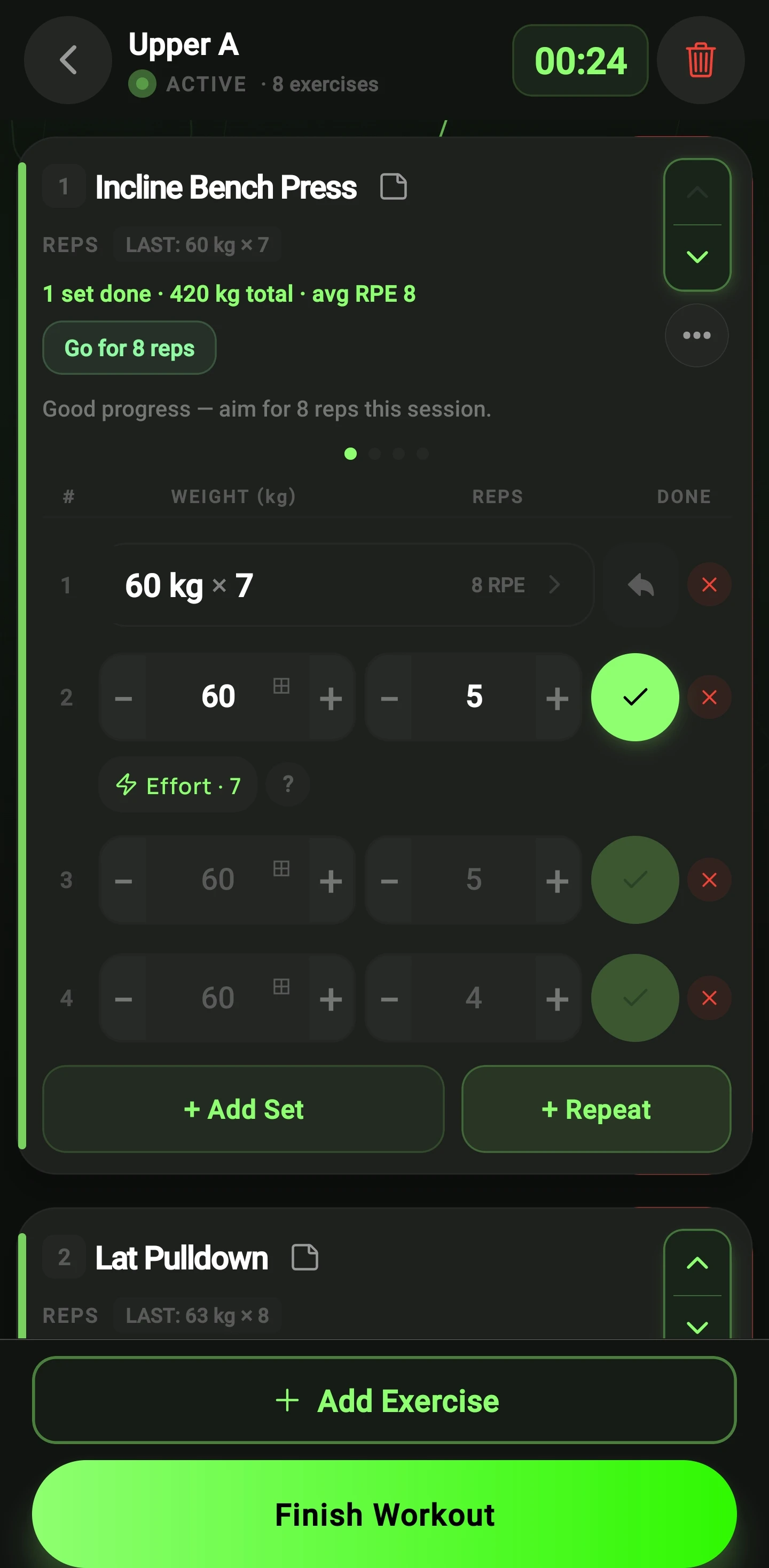
This is also why logging speed matters more than people give it credit for. If getting a session logged takes real effort, that's one more decision point where skipping wins. The faster the actual mechanics of a workout — starting a session, logging a set, finishing up — the less there is standing between "I don't feel like it" and "I did it anyway."
Make skipping feel like something, not nothing
If skipping a day costs you nothing visible, there's no reason not to skip. This is the entire logic behind a streak: it turns an invisible decision (do I go today) into a visible one (do I keep the streak alive). Loss aversion — the fact that losing something you have feels worse than never having gained it — is a genuinely stronger motivator than the vague promise of future progress.
This only works, though, if the streak is actually visible and actually feels like yours to protect. A number buried in a stats screen doesn't do much. A streak that's front and center every time you open the app does.
Have a real plan for the day you already skipped
Here's the part most advice skips: eventually you will actually miss a day. What happens next determines whether that's a blip or the end of the habit entirely.
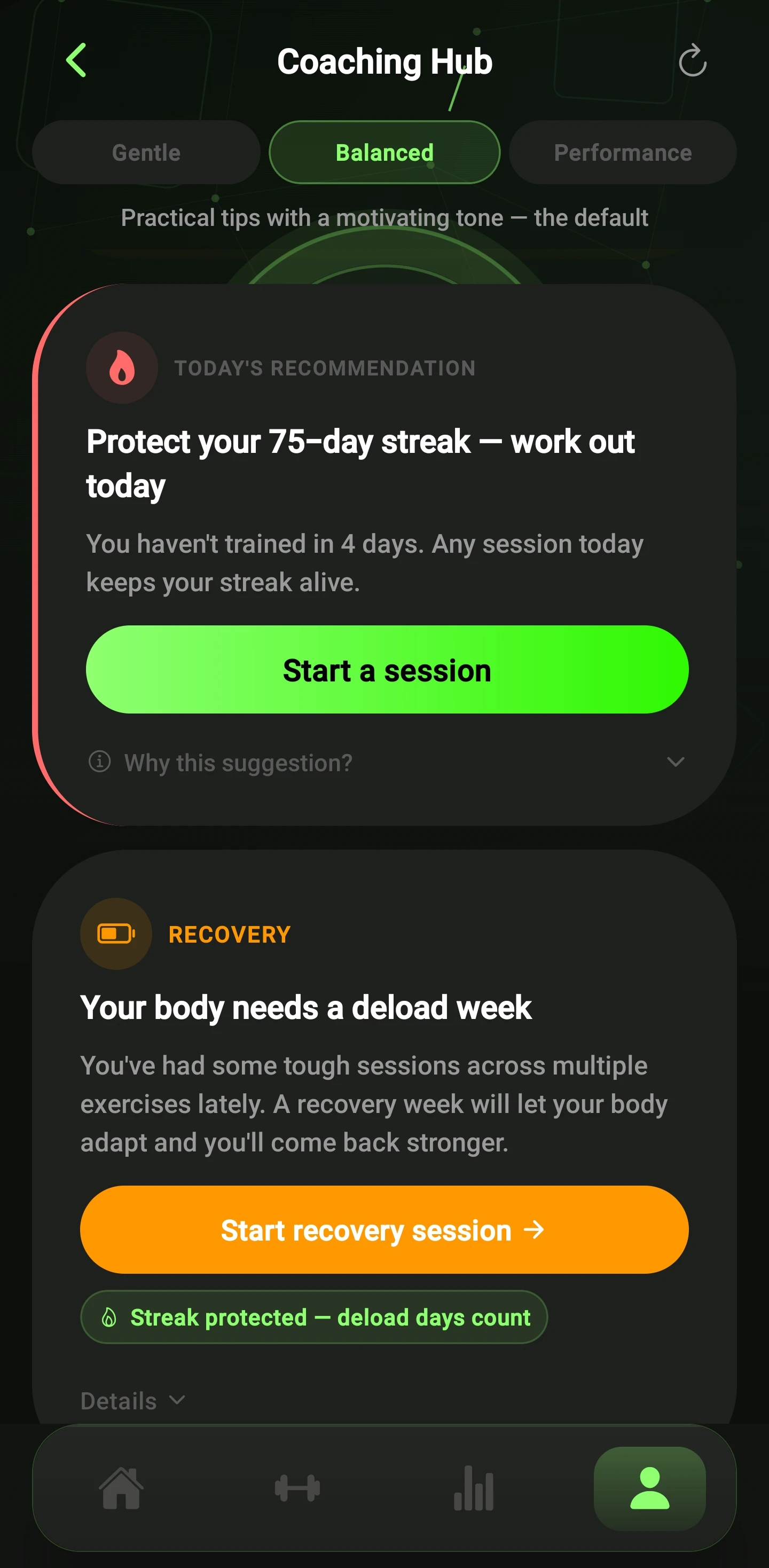
If missing one day means starting completely over, the cost of the first miss becomes enormous — which paradoxically makes people more likely to just give up rather than face resetting to zero. A shorter, smaller comeback goal after a miss — get back in within a defined window, rather than "start your whole streak over" — keeps the one bad day from turning into the reason you quit for good. This is a genuinely different design problem than apps like Fitbod solve — a good AI-generated program doesn't help on the day you don't open the app at all.
The actual answer
Nobody skips the gym because they lack information about why exercise is good for them. People skip because, in the moment, skipping is the path of least resistance. The fix is structural: make showing up require less willpower (fast logging, a five-minute floor), and make skipping cost something visible (a streak worth protecting, with a real way back when you inevitably miss one).