
July 14, 2026
How to Build a Gym Habit That Actually Sticks
Most gym habits collapse in the first month, and it's rarely about motivation. Here's what actually makes a workout routine stick — and how to track the part that matters.
You've done this before: a strong first week, a decent second week, and by week four the gym bag is back in the closet. That's not a willpower problem — it's a design problem. Most people try to build a gym habit the same way they'd build a New Year's resolution: high intensity, high ambition, and no plan for the day motivation runs out.
Here's what actually works.
Start smaller than feels productive
The instinct when you decide to "get serious" is to commit to five days a week, a full program, and a meal plan on top of it. That's exactly the version of the habit most likely to break the first time life gets in the way.
The habit that survives is the one that's almost embarrassingly easy to keep on a bad day. Two or three sessions a week, with a clear floor for what counts — even a fifteen-minute session counts — gives you a habit that can absorb a bad week instead of shattering on it.
Attach it to something that already happens
Habits stick when they're anchored to an existing routine, not floating in your calendar as one more thing to remember. "After I drop the kids at school" or "right after work, before I go home" works better than "sometime in the evening." The gap between deciding to go and actually going is where most gym habits die — close that gap by removing the decision entirely.
Track consistency, not just performance
Most workout trackers are built to log what you lifted — sets, reps, weight on the bar. That's useful, but it optimizes for the wrong thing when you're still building the habit. A volume chart trending up doesn't help you on the day you don't feel like training; a visible streak does.
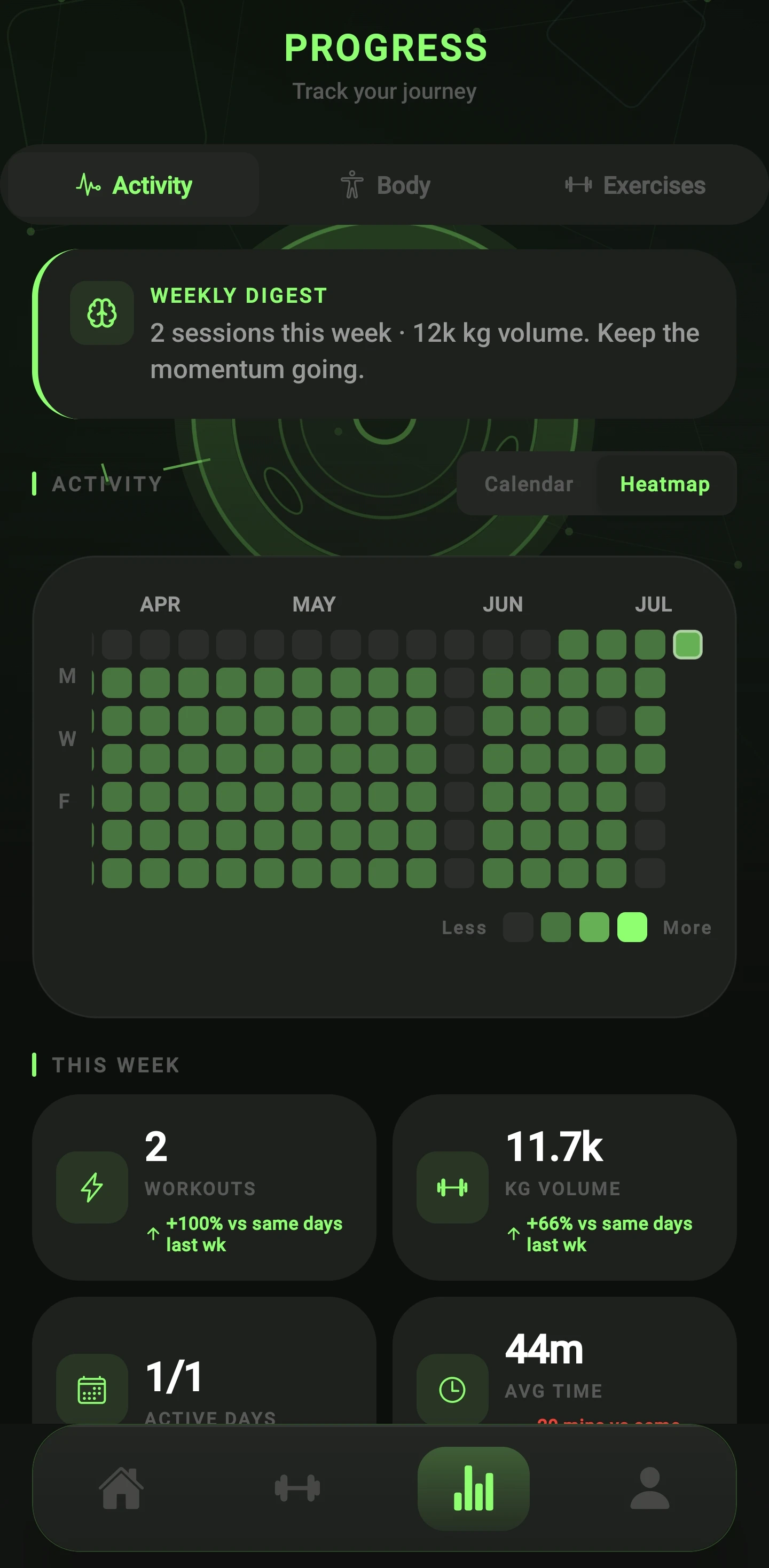
Seeing a month of consistency laid out — every day you showed up, mapped out like a calendar — does something a "1,240 lbs total volume this week" stat doesn't: it makes the pattern visible. You start protecting the streak, not just chasing a number.
Have a real plan for the day you don't want to go
Every gym habit eventually meets a day where you genuinely don't want to go. What determines whether the habit survives isn't whether that day happens — it always does — it's what's waiting for you when it does.
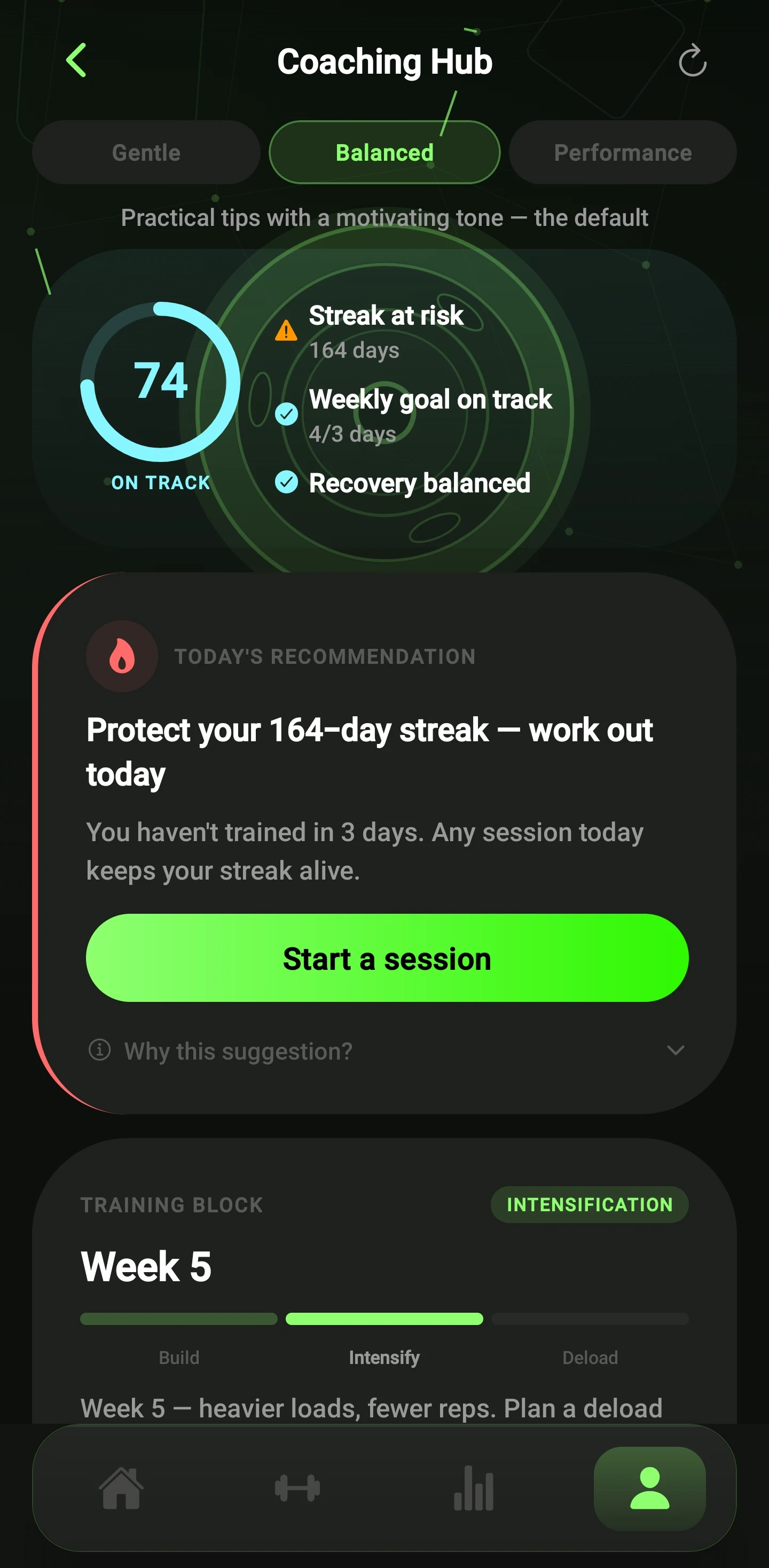
"Missed a day? Start over" is the single most common reason people quit for good. A single missed session turning into a reset-to-zero streak feels disproportionate, and disproportionate consequences make people give up entirely rather than get back on track. A real recovery path — a grace window, a smaller comeback goal, anything other than a hard reset — is what actually keeps people coming back after the inevitable miss.
The real trick: make the streak the point
The apps built purely around logging — Strong, for example — are excellent at recording what you did. But recording what you did isn't the same as giving you a reason to do it again tomorrow. That's a different design problem, and it's the one SweatStreak is built around: a streak that's visible, a recovery path when you miss a day, and coaching that explains the reasoning behind every suggestion instead of just handing you a number.
Building a gym habit isn't about finding more motivation. It's about designing a system that doesn't require motivation on the day you don't have any.